
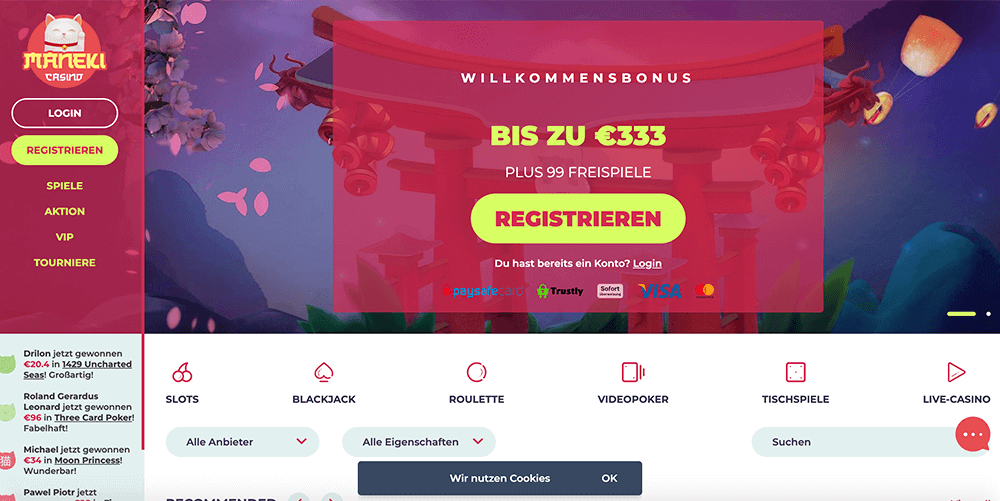
The key aspect that distinguishes a safe gambling environment from a risky one is a valid licence https://maneki.co.nl/legal-and-affiliates/. A gambling licence is not just a decorative emblem at the bottom of a homepage. It is a legally binding framework that determines how an operator manages your funds, protects your data, and ensures the randomness of their games. For players in the Netherlands, these mechanisms have become especially relevant since the controlled opening of the Dutch market. We function in a landscape where the difference between a locally approved operator and an internationally regulated one matters a great deal. The licensing body behind a platform like Maneki Casino sets the rules for dispute resolution, anti-money laundering checks, and responsible gambling tools. Without that oversight, you’re trusting a corporation with no legal obligation to treat you fairly. This guide covers the entire architecture of online casino licensing, from the technical auditing of random number generators to the specific requirements for affiliate partners who promote these platforms, so you can spot a trustworthy operation immediately.
The way a Casino Obtains and Retains a Licence
Securing a gambling licence is demanding and costly, intended to weed out companies that have no financial substance or ethical standing. Firstly, we have to submit comprehensive business plans, projected financial statements, and source-of-wealth declarations for each beneficial owner with a significant stake. The regulator probes the background of directors, looking for criminal records or past regulatory failures. Once the background checks succeed, the technical systems undergo scrutiny. The regulator insists on proof that our servers are located in secure, ISO-certified data centers and that our platform can manage failovers without data loss. Post launch, the maintenance phase is just as intense. We send quarterly financial reports, incident logs, and proof of ongoing staff training in anti-money laundering procedures. Regulators often perform mystery shopping exercises, setting up anonymous accounts to check our compliance with KYC and responsible gambling triggers. Should a player submits a complaint that we cannot resolve internally, it advances to the regulator’s adjudication panel, where the ruling is binding. Inability to comply results in escalating sanctions: financial penalties, licence suspension, and, ultimately, revocation. This constant oversight means a licensed casino is continually operating under the threat of losing its ability to trade, which aligns our business interests immediately with treating players fairly and transparently.
Key Regulatory Bodies and Their Jurisdictions
The global online gambling industry is regulated by several heavyweight regulators, each with a different philosophy. The Malta Gaming Authority (MGA) is perhaps the most active in the European online space, renowned for its thorough player protection framework and meticulous fit-and-proper tests for company directors. The United Kingdom Gambling Commission (UKGC) is generally viewed as the strictest, enforcing heavy fines for compliance failures and outlawing credit card use for gambling completely. In the Nordic region, the Swedish Spelinspektionen concentrates strongly on marketing restrictions, while the Gibraltar Regulatory Authority offers a tax-efficient base for many blue-chip operators. For the Netherlands particularly, the Kansspelautoriteit has created a model that prioritizes player channelization toward legal providers through stringent enforcement against unlicensed operators. When you see the KSA logo, you know the operator is tied to the Centraal Register Uitsluiting Kansspelen (Cruks), the national self-exclusion register. Curacao operates a separate model. Instead of a single government authority, Curacao grants licenses to master licence holders who then sub-license operators. While previously more lenient, modern Curacao reforms are stiffening these standards. Comprehending these jurisdictions helps you assess what level of protection you’re obtaining and what legal redress you have when a dispute emerge.
The Core Role of a Betting Licence
A gambling licence functions as a agreement between an operator and a independent body. When we secure a licence, we undertake to submit to periodic audits, hold specific liquidity reserves, and separate player funds from operational capital. That separation is essential. If a company undergoes bankruptcy, your deposited balance is legally protected and cannot be seized by creditors. Regulators also mandate strict identity verification protocols known as Know Your Customer (KYC) checks. These procedures aren’t designed to inconvenience you; they block identity theft and underage gambling. When you submit your ID at a licensed venue, that data must be encrypted and handled according to privacy laws the regulator enforces. A licence also sets the technical standards of the games. We cannot alter the payout percentage of a slot machine on a whim. Every game file is checked and confirmed against a master copy kept by an independent testing laboratory. That way, the mathematical model you observe advertised in the return-to-player (RTP) documentation matches the code running on the server. For Dutch players, the contrast between a licence issued by the Kansspelautoriteit (KSA) and one from a recognized international body like the Malta Gaming Authority often comes down to local tax implications and the availability of specific local responsible gambling interfaces.
The Legal Structure for Casino Affiliates
Affiliate advertising is a key channel through which players discover new platforms, but this relationship is thoroughly scrutinized by licensing bodies. An affiliate is an part of the casino’s marketing department, and we are legally liable for the claims made on affiliate websites. If an affiliate markets our brand with deceptive bonus terms or implies gambling as a remedy to financial problems, we face regulatory sanctions. A accountable affiliate programme, such as the one structured for Maneki Casino partners, enforces a strict code of conduct. Affiliates must not aim at minors, must include “18+” warnings, and must clearly reveal the commercial nature of their association with us. They are also prohibited from presenting gambling as a viable investment or income source. The licensing terms demand us to end partnerships immediately if an affiliate infringes these responsible advertising protocols. In regulated markets like the Netherlands, affiliates often must to register with the local regulator or prove that they only promote licensed operators. The legal contract between an operator and an affiliate includes commission structures (usually revenue share, cost-per-acquisition, or hybrid models), but it also includes clauses regarding intellectual property usage. Affiliates cannot compete on our branded keywords in search engines to influence traffic, a practice known as brand bidding, which is strictly forbidden in a compliant affiliate agreement. This ensures that the marketing ecosystem remains just, transparent, and safe for the end user.
Comprehending the Dutch Online Gambling Landscape
The Netherlands maintains a unique position in Europe, having transitioned from a state monopoly to a regulated open market relatively recently with the Remote Gambling Act (Koa). This law placed the Kansspelautoriteit into the spotlight as a watchful enforcer. For a platform to legally target Dutch consumers, it must obtain a KSA licence, which enforces strict advertising restrictions. You will notice that KSA-licensed entities are barred from untargeted mass advertising during daytime hours and need to supply clear information on addiction risks. The Dutch regulator also implements a strict cooling-off period, where players cannot reverse a self-exclusion decision for a minimum duration. This contrasts with some international licences where cooling-off periods may be shorter. The Dutch market highlights “channelization,” aiming to move at least 80% of players from illegal to legal supply. To achieve this, the KSA actively surveils the internet for unlicensed operators taking Dutch IP addresses and imposes substantial fines. As a player in the Netherlands, connecting to a KSA-licensed portal ensures that the website is designed for Dutch tax laws, meaning your winnings are managed correctly regarding kansspelbelasting (gambling tax). It also guarantees that the customer support team is equipped to manage queries in Dutch and that the payment methods mirror local preferences, such as iDEAL, which is a cornerstone of the Dutch online payment ecosystem.
Player Protection and Dispute Resolution Mechanisms
A real benefit of gambling at a authorized establishment is availability of a formal Alternative Dispute Resolution (ADR) service. If you feel a bet was processed inaccurately or a withdrawal was improperly postponed, you are still able to seek help. uitgebreide informatie Licensed operators must partner with an third-party ADR provider. These bodies serve as mediators, examining the game logs, terms and conditions, and communication history to deliver a final verdict. In the Netherlands, the KSA provides a dedicated complaint channel, while MGA-licensed entities often employ services like eCOGRA or ThePogg. Beyond disputes, licensing frameworks mandate the implementation of responsible gambling tools immediately into the user interface. We are obligated to provide deposit limits, loss limits, wager limits, and session time reminders. A licensed operator has to follow a self-exclusion request without delay. If you register for Cruks in the Netherlands, every KSA-licensed site has to block your access quickly. We also regard the protection of minors as paramount. A licensed site cannot depend on a checkbox verifying age. It must authenticate identity against official databases prior to the first deposit is completed. These levels of protection—financial, temporal, and identity-based—convert a casino from a basic gaming site into a managed, safe digital environment where the risk of harm is proactively mitigated through mandatory software protocols.
Anti-Money Laundering (AML) and Security Measures
A gambling licence turns a casino into a financial institution subject to stringent Anti-Money Laundering directives. We function under the same broad legislative umbrellas as banks in uncovering financial crime. This entails transaction monitoring systems that examine betting patterns for structuring, where criminals split large sums into smaller deposits to avoid detection. If a player adds a large sum, spends a minimal amount on low-risk bets, and then submits a withdrawal to a different payment method, our automated systems mark this as suspicious. Licensing mandates us to appoint a dedicated Money Laundering Reporting Officer (MLRO) who coordinates directly with financial intelligence units. For Dutch players, this corresponds with the European Union’s AMLD directives and local Wwft legislation. We are also bound by data security laws, primarily the General Data Protection Regulation (GDPR). Your identity documents, payment card data, and betting history are categorized as sensitive personal data. We must store this information on encrypted servers with strict access controls and breach notification protocols. A licensed operator may not sell your data to third-party marketing firms without explicit consent. The security protocols apply to payment processing, where PCI-DSS compliance is mandatory to guarantee your credit card details are never stored in plain text. This financial-grade security infrastructure is expensive to maintain and is a primary reason unlicensed operators avoid regulation entirely.
The Importance of Game Fairness and RNG Auditing
Under the flashing lights of every slot machine exists a complex piece of mathematics known as a Random Number Generator (RNG). Licensing confirms this RNG is not a rigged algorithm but a cryptographically secure system that produces unpredictable outcomes. Independent testing laboratories, such as iTech Labs, Gaming Laboratories International (GLI), and BMM Testlabs, are authorized by regulators to tear these systems apart. They run billions of simulated spins to confirm that the statistical distribution of symbols matches the theoretical model. They also test the “unpredictability” of the seed values to make sure no engineer can forecast the next outcome. We cannot pass a compliance audit if the RNG shows even a slight statistical bias. These labs also audit the Return to Player (RTP) over millions of rounds to confirm that the game pays back the advertised percentage over its lifecycle. For live dealer games, the licensing extends to the physical studio. Cameras must offer clear, unobstructed views of the dealer and the equipment. Shuffling machines are tested for true randomness, and card decks are frequently changed and logged. This oversight indicates that when you sit down to play a hand of blackjack or spin a reel, the outcome is determined by pure chance, not by a hidden server setting designed to manipulate your session length.
How to Check a License and Detect Non-regulated Operators
Get into the habit of verifying licences before putting in any funds. This process is easy and takes just a few seconds. Scroll to the footer of the casino website and find the interactive regulator logo. A legitimate licence seal is never simply a static image; it needs to act as a hyperlink that takes you to the authorized register of the relevant authority. Once you click it, you end up on a government or regulator-hosted webpage displaying the company’s registered name, licence number, and present status. Should the logo not be clickable, or if the link goes to a generic homepage as opposed to a specific validation page, treat this as a major red flag. You should also double-check the URL. Unlicensed copycats often mimic the visual design of reputable casinos but operate on a slightly misspelled domain. Look for the inclusion of ADR logos and testing lab certificates, which ought to also be verifiable. A further clue of an unregulated operator is the lack of detailed terms and conditions about bonus wagering requirements or the omission of a privacy policy compliant with GDPR. When the withdrawal process asks you to provide identification documents via insecure email rather than a secure upload portal, the operator is probably violating data protection laws. By carrying out these verification steps, you safeguard yourself from identity theft, rigged games, and the impossibility of withdrawing your winnings, ensuring your experience stays a form of entertainment rather than a vulnerability.